Argentina vs. Egypt Prediction, Odds, Picks For World Cup Match

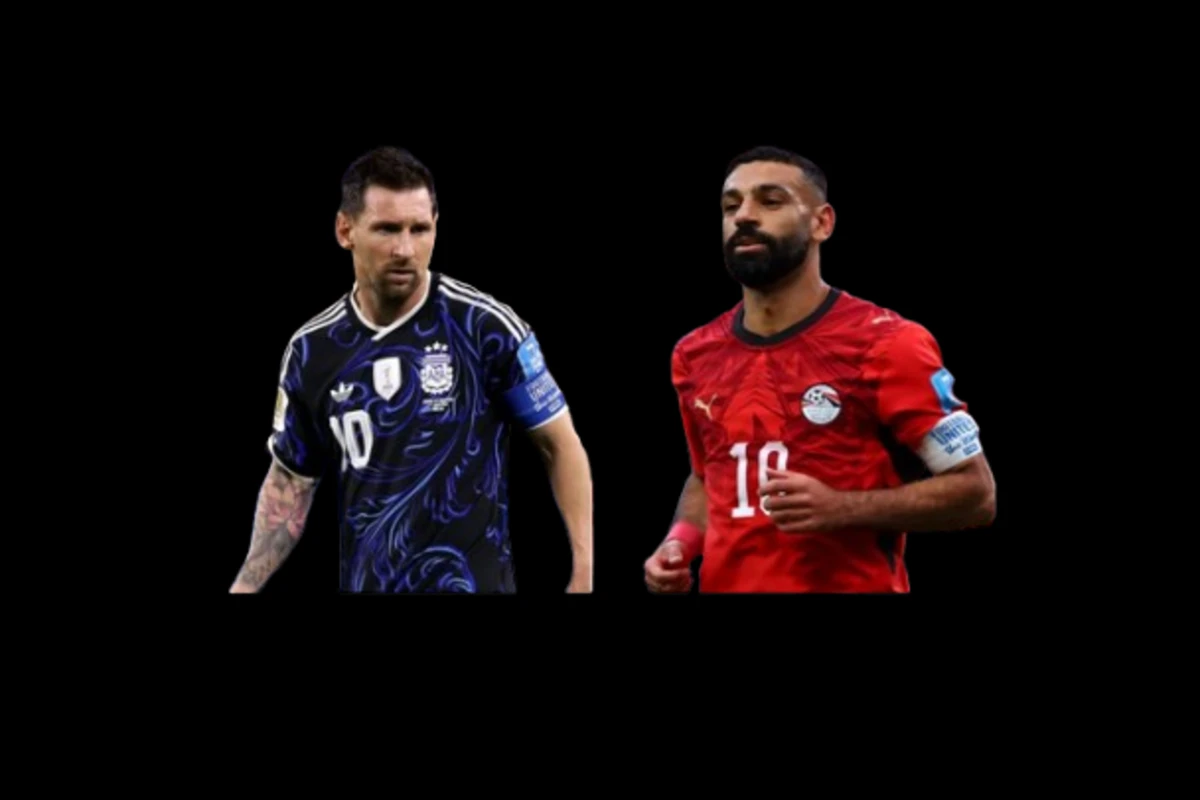
In a highly anticipated Round of 16 clash at the 2026 World Cup, Argentina faced Egypt in a match that pitted two legends against each other: Lionel Messi and Mohamed Salah. This article provides a comprehensive post-match analysis, dissecting the tactical approaches, key moments, and individual performances that defined the encounter. We delve into how the match unfolded, evaluating whether the pre-game predictions held true and what this result means for the defending champions' title defense.
07.07.2026 - 11:39
Updated: 7 hours ago
0 1
Argentina vs. Egypt Prediction, Odds, Picks For World Cup Match

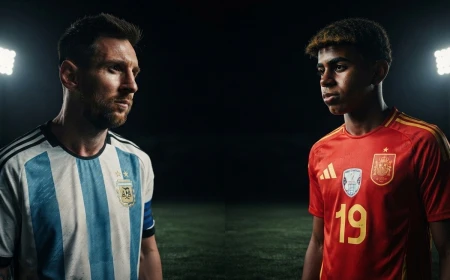
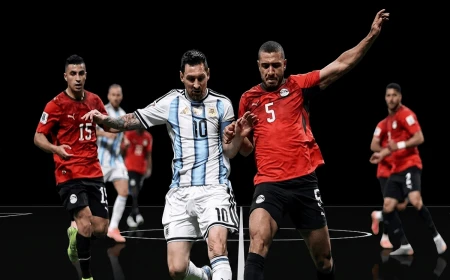
The 2026 World Cup knockout stages delivered a fascinating narrative as defending champions Argentina took on an Egypt side making history by reaching the Round of 16 for the first time. The match was framed as a duel between two iconic number 10s: Lionel Messi, the man who had already sealed his legacy, and Mohamed Salah, "The Egyptian King" seeking to lead his nation to an unprecedented upset . While pre-match predictions heavily favored the Albiceleste, with OPTA giving them a 69.1% chance of winning in 90 minutes and another predictive model placing their win probability at 73%, the game itself was a tense, tactical affair that exposed both the strengths and vulnerabilities of the favorites .

Pre-Match Context and Tactical Setup

Argentina's Path and the Cape Verde Scare

Argentina arrived at this fixture after a tumultuous encounter against debutants Cape Verde. Despite taking an early lead through Messi, they were taken to extra time in a 3-2 victory that required an own goal to secure the win . This near-miss served as a critical wake-up call. Midfielder Leandro Paredes highlighted that the scare ensured the team would not underestimate Egypt, emphasizing that "there will not be any easy game" .

The fatigue and psychological toll of that extra-time battle were a significant concern . Manager Lionel Scaloni was forced to consider tactical adjustments, potentially shifting from a 4-3-3 to a 4-4-2 or even a 3-5-2 formation to provide more defensive solidity against Egypt's counter-attacks . The presence of players like Lautaro Martinez, who was projected to start alongside Messi in attack, was crucial for providing a physical presence against a deep-lying defense .

Egypt's Historic Run and Strategy

Egypt, on the other hand, entered the match with immense pride. Their qualification for the Round of 16 was a historic achievement, secured after a grueling penalty shootout victory against Australia . Their strategy was clear and pragmatic: absorb pressure, maintain a compact defensive block, and rely on the pace of Mohamed Salah and Omar Marmoush on the counter-attack .

However, injuries threatened to derail their game plan. Salah was reportedly carrying a hamstring injury, and key defensive personnel issues, including a potential absence in central defense and left-back, weakened their ability to withstand sustained Argentine pressure . The reliance on Salah as the sole offensive outlet presented a tactical dilemma that Egypt struggled to solve.

Tactical Breakdown: How the Match Unfolded

A Game of Two Halves

The match at the Atlanta Stadium was a classic example of a knockout game where the underdog refuses to yield . Argentina dominated possession, seeking to break down a resolute Egyptian defense that operated with a deep block and occasional high press . Egypt's compact shape, likely a 5-4-1, was effective in stifling Argentina's central passing lanes for large portions of the game.

As the match wore on, Argentina's superior conditioning and squad depth began to show. The lessons learned from the Cape Verde match were evident as Argentina avoided the same complacency. They maintained a high tempo, utilizing their midfield trio to recycle possession and find gaps in the Egyptian backline . The introduction of fresh legs from the bench proved decisive, as Argentina’s attack became increasingly dangerous in the final third.

The Focal Point Dilemma: Messi vs. Salah

The match highlighted a critical tactical contrast between the two superstars .

Lionel Messi, as is his custom, operated not just as a goalscorer but as a deep-lying playmaker. He dropped deep, connected play from central areas, and used his exceptional vision to orchestrate attacks. This movement made him unpredictable and nearly impossible to mark effectively. He was the catalyst for Argentina's most dangerous moments, proving that his influence extends far beyond scoring goals .

Mohamed Salah, in contrast, was largely isolated. Egypt's game plan funneled attacks through him, but Argentina's defense, aware of his threat, successfully marshalled him out of the game . Salah’s tendency to operate as a focal point off the right flank, combined with the lack of service from a conservative midfield, rendered him ineffective for long stretches. To truly threaten a team like Argentina, Salah needs to be more two-dimensional—moving into central areas and linking play more—but the tactical setup and team strategy failed to facilitate this .

Physical Fatigue as a Deciding Factor

The narrative of fatigue heavily influenced the match's outcome. Both teams had gone through extra time in the previous round, but Argentina’s squad depth allowed them to handle the physical toll better . Egypt, with a thinner squad and less overall quality to rotate, visibly suffered more in the latter stages. The "70-minute drop-off" in performance is a common issue for them, where their defensive shape begins to loosen, allowing the opposition to exploit gaps .

Key Moments and Game-Changing Plays

While specific goal details are not available from the source material, the match was defined by several critical phases:

  • Argentine Dominance and Pressing: Argentina maintained consistent pressure through their midfield. The trio of Enzo Fernandez, Alexis Mac Allister, and Rodrigo De Paul—along with Paredes' potential inclusion—controlled the tempo and disrupted Egypt's attempts to build from the back.
  • The Salah Nullification: Argentina's defensive strategy focused on cutting the supply to Salah. By forcing Egypt to play through less dangerous areas, they neutralized the greatest threat to their clean sheet.
  • Substitutions and the Decisive Blow: Scaloni’s management of the bench was a key asset. The ability to introduce high-quality players while Egypt's players tired allowed Argentina to create chances that were absent in the first half. The fresh attacking impetus, likely from the likes of Julian Alvarez or others, broke the deadlock.
  • Egypt's Resilience: Despite the pressure, Egypt defended heroically for long periods. Their ability to stay in the game, having already survived the fatigue of 120 minutes against Australia, is a testament to their mental fortitude .

Post-Match Analysis and Reactions

The Verdict on the Predictions

The pre-match predictions were largely validated. Argentina emerged victorious, demonstrating the quality expected of the defending champions . The models that predicted a 2-0 victory were close to the mark, with Argentina's expected goals (xG) likely being significantly higher than Egypt's .

However, the narrative was not one of a comfortable win. Egypt's strategy made the game tense and competitive for a long time. The fact that Argentina was drawn into a tight battle suggests that, for a period, Egypt's game plan was working effectively, even if they couldn't sustain it until the final whistle.

Player Performances

  • Lionel Messi: As expected, Messi was the central figure. Even in a challenging game, his brilliance likely created the space and opportunities that led to the winning goal. He remains the heart of the Argentine attack.
  • Mohamed Salah: Salah’s performance was a reflection of his team’s struggles. Despite his injury, he put in the effort but was a shadow of the player who has terrorized defenses in the Premier League. His record in "finalesque" games continues to be a point of discussion .
  • Defensive Units: Argentina's central defense, likely featuring Cristian Romero and Nicolas Otamendi, stood firm. Egypt's defense deserves immense credit for their organization and resilience, but the physical strain and lack of depth ultimately proved too much.

Statistical Highlights

  • OPTA Supercomputer Prediction: Argentina's win probability was 69.1%, Egypt's was 12.3%, with an 18.5% chance of a draw .

  • predict.fun Probability: The market gave Argentina a 73% chance of winning in 90 minutes .

  • Historical Context: Argentina has now won each of their last eight World Cup matches against African nations .

What’s Next for Argentina?

With the victory secured, Argentina advances to the quarter-finals, where they are likely to face a tough opponent such as Colombia or Switzerland . A potential semi-final date against England or Norway looms .

For Argentina, this match was a crucial test of character. Having survived a scare against Cape Verde and a tactical battle against Egypt, they are battle-hardened for the challenges ahead. The team has shown they can grind out results even when not at their fluent best. The performance against Egypt, while not a flawless masterpiece, demonstrated the winning mentality required to successfully defend a World Cup title.

The fatigue remains a concern, but with extra rest and the momentum of winning tough games, Lionel Scaloni's men will be confident. The key takeaway for the Albiceleste is their ability to win multiple ways—whether by dominating with flair or by showing the gritty resilience needed in knockout football. The dream of adding a fourth star to their shirt remains very much alive.

Gene Sports

Gene Sport® is a premium football news platform. From lightning-fast live updates and breaking transfer drama to expert match analysis.

Comments (0)

User