The Iberian Heartbreaker: A Tactical Autopsy of Spain's Late-Night Heist Against Portugal
In a cagey yet emotionally charged Round of 16 clash at the AT&T Stadium in Dallas, Spain edged out Iberian rivals Portugal with a heart-stopping 91st-minute winner from substitute Mikel Merino. The match, defined by tight defensive lines and high stakes, saw Spain's midfield control eventually break down a resilient Portuguese defense, concluding what is likely the final World Cup appearance for legendary forward Cristiano Ronaldo . This analysis delves into the tactical nuances, key battles, and "super-sub" impact that decided this heavyweight encounter.
The Iberian Derby needs no introduction, but when it arrives on the stage of a FIFA World Cup knockout round, the stakes are elevated to a fever pitch. The Round of 16 clash between Spain and Portugal at the 2026 World Cup was billed as a clash of styles: Spain’s meticulous possession-based control versus Portugal’s explosive transition play . Hosted in the imposing AT&T Stadium in Texas, the match promised fireworks but delivered a tense, attritional war of nerves .
For Spain, it was a test of their status as tournament favorites, boasting a squad rich in young talent like Lamine Yamal and experienced generals like Rodri. For Portugal, it was a quest for glory and a poignant chapter in the career of 41-year-old Cristiano Ronaldo, who had declared that this would be his final World Cup . Ultimately, it was a game of fine margins decided by the depth of the Spanish bench and a moment of late magic.
Tactical Setups: A Clash of Formations
Spain: Patient Control with Wide Threats
Luis de la Fuente fielded his preferred 4-2-3-1 formation, looking to dominate possession and utilize the width provided by the young star Lamine Yamal on the right and Alex Baena on the left. Rodri and Pedri formed the double pivot, tasked with dictating tempo and recycling possession, while Dani Olmo operated in the crucial number 10 role, searching for space between the Portuguese defensive and midfield lines . The back four of Pedro Porro, Pau Cubarsi, Aymeric Laporte, and Marc Cucurella aimed to maintain a high line to compress the space for Portugal’s attackers .
Portugal: The 4-2-3-1 and Reliance on Wide Men
Roberto Martinez mirrored the formation, relying on a strong defensive core and the creativity of his wide players. Diogo Costa manned the goal with a back four of Joao Cancelo, Ruben Dias, Renato Veiga, and Nuno Mendes. The midfield pivot of Vitinha and Joao Neves was tasked with disrupting Spain's rhythm and feeding the attacking quartet. The primary creative outlets were Pedro Neto on the right and the dynamic Rafael Leao on the left, while Bruno Fernandes operated centrally, looking to supply Ronaldo, who led the line alone .
The First Half: A Tactical Stalemate and a Defining Duel
The first 45 minutes were characterized by a tense, cagey affair. Spain, as expected, enjoyed the majority of possession, but they struggled to break down a disciplined and well-organized Portuguese defense . The most significant tactical battle took place on the right flank of Spain's attack.
The Yamal vs. Mendes Showdown
Much of the pre-match analysis focused on the duel between 18-year-old Spanish sensation Lamine Yamal and the Portuguese left-back Nuno Mendes . The first half showcased exactly why this battle was pivotal. Mendes, in what was described as a stellar individual performance, managed to neutralize much of Yamal's direct threat for the opening hour . He was strong in the tackle and disciplined in his positioning, ensuring that Spain’s primary outlet was kept relatively quiet and forcing Spain to look for creativity elsewhere . As one analysis noted, Mendes "kept Spain’s attacking dangermen largely at bay during the first half" .
However, this duel came at a cost for Portugal. While Mendes was defensively sound, his attacking influence was somewhat curbed, limiting one of Portugal’s key attacking options. The best chance of the first half actually fell to Portugal from a set piece, where Nuno Mendes’s deflected strike rocketed off the crossbar, coming agonizingly close to breaking the deadlock . Spain also had a golden opportunity through Mikel Oyarzabal, who was played in one-on-one but pulled his shot wide .
The Second Half: The Press Weakened, The Space Opened
The second half saw a similar pattern, but Spain began to exert more territorial pressure as the game wore on. The match began to open up slightly, but both teams struggled to create clear-cut chances . Spain's midfield trio of Rodri, Pedri, and Olmo started to find more space and dictate play, forcing Portugal to drop deeper and inviting more pressure onto their backline .
The key tactical shift came through substitutions. Portugal, feeling the physical toll of the game, began to replace key players. The most significant change was the injury-enforced removal of Nuno Mendes in the 55th minute, replaced by Nelson Semedo .
The Substitution That Changed Everything
Mendes' departure was arguably the turning point of the match. Without his defensive solidity on the left flank, Lamine Yamal finally found space and began to cause problems for the Portuguese defense . This tactical shift from Martinez, though forced, completely changed the dynamic of the game.
Luis de la Fuente capitalized on this momentum shift with his own masterstroke. In the 74th minute, he introduced Ferran Torres, and in the 85th minute, he sent on Mikel Merino for Dani Olmo . The impact was immediate and devastating.
The Decisive Moment: Merino’s 91st-Minute Strike
The goal itself was a tactical masterclass in execution. A seemingly innocuous free-kick for Spain deep in their own half was taken quickly by Rodri. He played a simple pass to Ferran Torres, who then delivered a perfectly weighted through ball that sliced open the Portuguese defense .
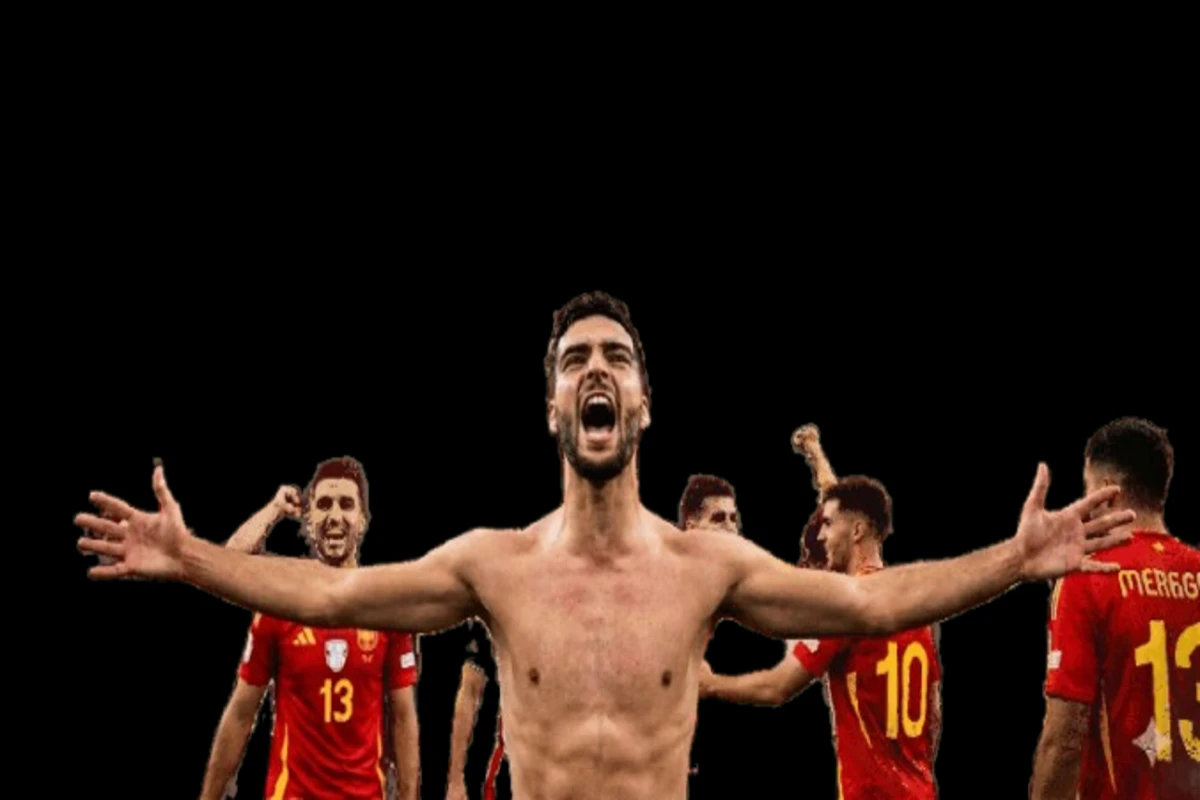
The ball was played into the path of the onrushing Mikel Merino, who had made a perfectly timed run from midfield. Unlike the earlier miss from Oyarzabal, Merino was clinical. He took one touch to control the ball before calmly slotting a low left-footed finish past the diving Diogo Costa .
Why the Goal Happened
-
Loss of Defensive Pivot: With Renato Veiga and Ruben Dias drawn to the initial ball movement, and with the midfield line retreating, a gap appeared for Merino to run into.
-
Torres’ Vision: Ferran Torres’s role as the "aggressor" was key; his clever flick unlocked the defense instantly.
-
Capitalizing on Mendes’ Absence: The space on that side of the pitch had been a battleground all game. With the more defensive Semedo on the pitch but focusing on Yamal, the central channel was left exposed for Merino's run .
Player Ratings: Who Shone and Who Floundered
Spain's Heroes
-
Rodri (8/10 - Man of the Match): The midfield anchor was immense. He controlled the tempo, made crucial interceptions, and initiated the match-winning move. His presence was the bedrock of Spain's performance .
-
Mikel Merino (8/10): The ultimate super-sub. Introduced in the 85th minute, he won the game five minutes later with a cool, composed finish .
-
Lamine Yamal (7/10): Though quiet for much of the game due to Nuno Mendes’ excellent marking, he grew in influence after the Portuguese defender's departure and remained a constant threat .
-
Pedro Porro (7/10): Solid defensively against the threat of Leao and provided an attacking outlet .
-
Ferran Torres (7/10): Came off the bench and provided the killer assist with a moment of brilliance .
Portugal's Positives
-
Nuno Mendes (8/10): Was arguably the best player on the pitch for Portugal until his injury. He successfully shackled Yamal and was a constant threat going forward, hitting the crossbar .
-
Renato Veiga (7/10): A solid presence in the defense, making crucial blocks to deny Pedri .
-
Diogo Costa (7/10): Made several important saves to keep Portugal in the game, particularly in the first half .
Portugal's Weak Links
-
Bruno Fernandes (4/10): Faded into anonymity during the crucial periods of the game, failing to provide the creative spark needed to unlock the Spanish defense .
-
Cristiano Ronaldo (5/10): A disappointing final World Cup outing for the legend. He was starved of service and could not replicate the magic of previous tournaments. While he showed flashes of his old instincts, he was largely contained by Spain’s defense and midfield .
The End of an Era: Ronaldo's Emotional Farewell
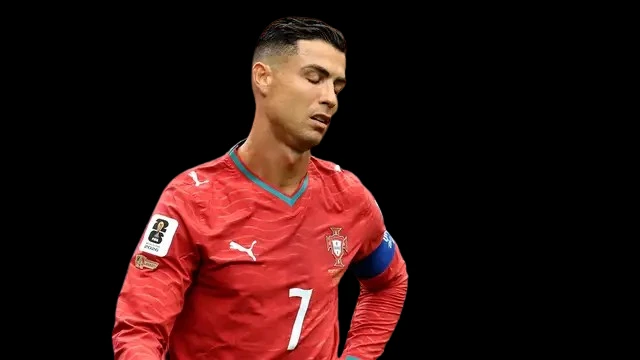
The final whistle marked the end of a 20-year World Cup journey for Cristiano Ronaldo. The 41-year-old, visibly emotional with tears in his eyes, walked around the pitch applauding the Portuguese fans, acknowledging that his dream of lifting the World Cup trophy was over .
While he had scored three goals in his sixth World Cup appearance, he was unable to guide his team past a formidable Spanish side . His departure symbolizes a generational shift in international football. The torch, at least for this tournament, was passed to the next generation of Spanish talent who now march on with confidence .

Conclusion: A Victory Born of Resilience and Depth
Spain’s 1-0 victory over Portugal was not a display of attacking flair, but a testament to their tactical discipline, squad depth, and resilience. They weathered an early Portuguese storm, overcame a disciplined defensive display, and utilized their bench perfectly to snatch a victory from a match that was heading for extra time .
For Portugal, the defeat will be a bitter pill to swallow. They came within minutes of an unlikely victory despite their struggles, but the loss of a key defensive cog and a momentary lapse of concentration ultimately cost them. The tournament continues for Spain, who will face the winner of the USA-Belgium clash, while for Portugal and Ronaldo, the journey ends in heartbreak . The "Iberian Heartbreaker" will be remembered as a tactical affair decided by a moment of magic, showcasing the fine margins that define World Cup knockout football.
Comments (0)